
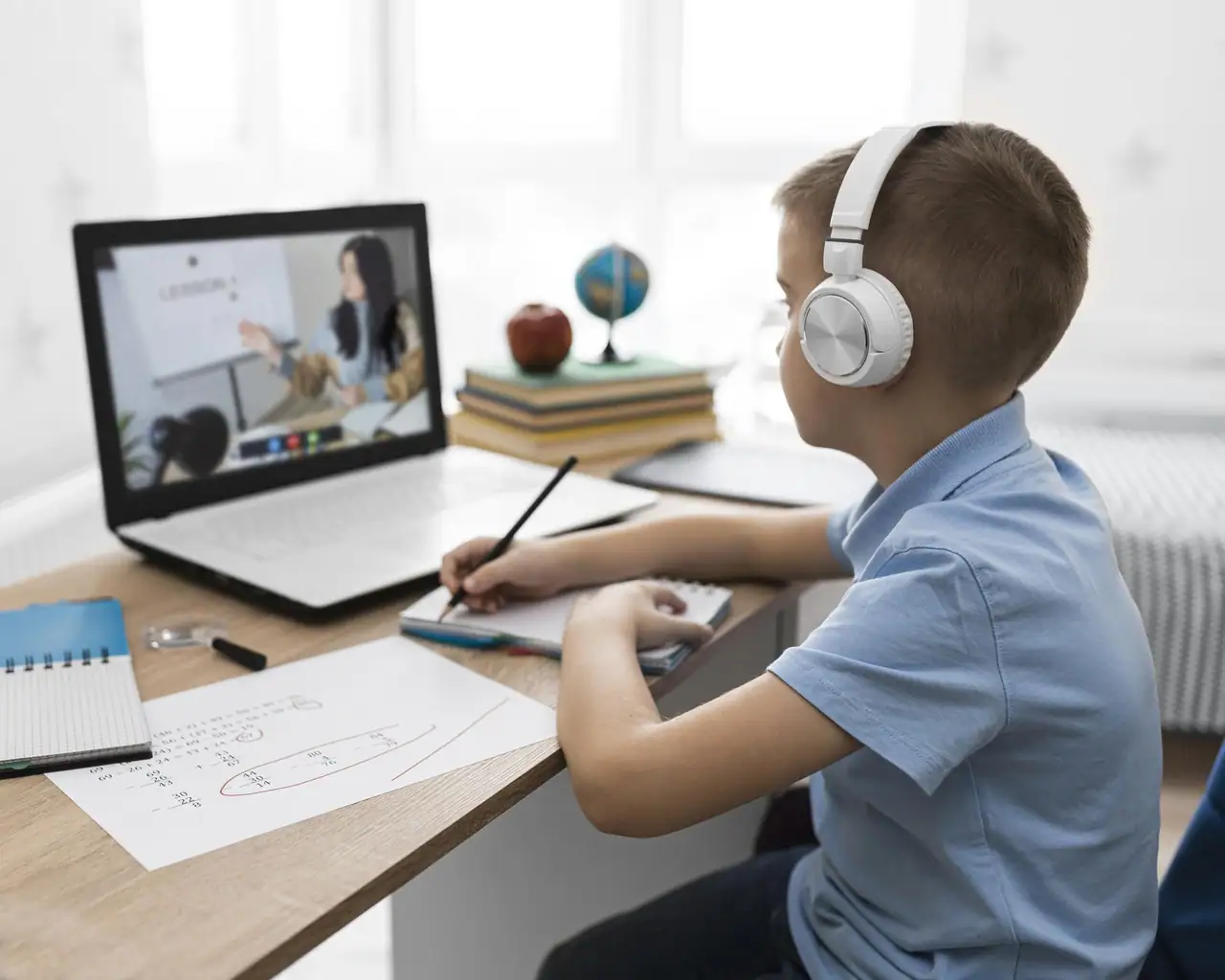
Choosing between online tutoring and in-person tutoring usually comes down to more than personal preference. Location, your child’s age, the subject they need help with, and how they respond to screens versus face-to-face contact all play a part. Neither format is universally better than the other; each suits different children and different circumstances. If you’re weighing up online tutoring for your family, it helps to look at where each format tends to work well before deciding.
What’s the Actual Difference?
The two formats sound self-explanatory, but the practical differences go beyond where the session happens.
- Online tutoring takes place over video call, usually with a shared digital whiteboard or document so the tutor and student can work through problems together in real time.
- In-person tutoring happens face-to-face, either at the student’s home, the tutor’s location, or a dedicated tutoring centre.
- Both formats can be delivered one-on-one or in small groups, so “online” and “group” aren’t the same decision.
- Both can follow the same curriculum and structure; the format changes how the session is delivered, not necessarily what’s covered.
Online Tutoring vs In-Person Tutoring: A Side-by-Side Comparison
| Factor | Online Tutoring | In-Person Tutoring |
| Access | Available anywhere with a stable internet connection, including regional and rural areas | Limited to tutors who can travel to or meet within a reasonable distance |
| Scheduling | Generally easier to fit around after-school activities, since there’s no travel time either side | Requires travel time for the tutor, student, or both, which can limit available time slots |
| Engagement for younger children | Can be harder to sustain focus, particularly for primary-aged students | Often easier to keep younger children engaged with physical materials and direct supervision |
| Subject suitability | Works well for subjects built around discussion, writing, and problem-solving talked through step by step | Can be easier for subjects needing hands-on demonstration or shared physical materials |
| Technology requirements | Needs a reliable device, internet connection, and basic comfort with video call tools | No technology dependency beyond what the tutor brings |
| Building rapport | Achievable, but can take longer to establish for some students | Often develops naturally through in-person interaction |
Is Online Tutoring Effective?
This is the question most parents actually want answered, and the honest response is that it depends heavily on the student rather than the format itself. Online tutoring tends to work well for:
- Students in regional or remote areas. Around one in five Australians live outside major cities, according to the Australian Bureau of Statistics’ Remoteness Structure, and access to specialist tutors is far more limited outside metropolitan areas. Online tutoring removes that geographic barrier entirely.
- Secondary students who are used to independent, screen-based learning and can concentrate through a video call without much supervision.
- Families juggling tight after-school schedules, since there’s no travel time built into the session.
- Subjects like English, essay-based humanities, and most of high school maths and science, where a shared digital whiteboard works nearly as well as a physical one.
It tends to be less effective, or at least requires more adjustment, for younger primary-aged children who need closer supervision to stay on task, and for students who find screen-based learning draining after a full day at school already spent on devices.
One-on-One Online Tutoring: What Makes It Different
One-on-one online tutoring keeps the personalised attention of traditional individual tutoring while removing the location barrier. The tutor can tailor pace and explanation style to one student exactly as they would in person, and a shared digital whiteboard lets both tutor and student annotate working out in real time, closing a lot of the gap that used to exist between video-call tutoring and sitting at the same table.
The main trade-off is that a tutor working online can’t physically point to a mistake on the page or immediately see whether a student’s body language signals confusion, so it relies on the student being reasonably comfortable saying when they’re stuck rather than a tutor picking up on it automatically.
How to Choose an Online Tutoring Platform
If you’ve decided online tutoring suits your family, the platform itself matters as much as the tutor. Look for:
- A genuine shared workspace, not just a video call with no way to write or draw together.
- Session recording or notes, so your child can revisit what was covered.
- Consistent tutor matching, since switching tutors frequently undoes a lot of the rapport-building benefit of one-on-one support.
- Clear communication with parents about progress, rather than sessions happening in isolation.
- A trial or guarantee period, so you’re not committed before knowing whether the format and the tutor suit your child.
Home Tutoring vs Online Tutoring: Clearing Up the Terms
“Home tutoring” usually refers to a tutor visiting the student’s home in person, which can be confusing since online tutoring also happens from home, just via video call rather than face-to-face. The genuine comparison is between in-person tutoring (whether that’s at home, the tutor’s location, or a centre) and online tutoring (delivered remotely, regardless of where the student is sitting). It’s worth being clear about which one you’re actually comparing when you’re reading reviews or asking other parents for recommendations, since the terms get used loosely.
So, Which Is Right for Your Child?
There’s no single correct answer, but a few practical questions tend to narrow it down. Does your child already manage independent screen-based work reasonably well, or do they need someone physically present to stay focused? Is there a suitably experienced tutor available locally for the specific subject or exam your child needs help with? And does your family’s schedule realistically allow for travel time, or would that time be better spent studying? For many families, especially those supporting a child through primary school tutoring in the younger years and shifting to more independent online sessions in high school, the right answer changes as a child gets older – and it’s not always an either-or decision, since plenty of families use one format during term time and the other over school holidays.
Conclusion
Online and in-person tutoring can both work well, and the right choice usually comes down to your child’s age, how they focus on screens, the subject they need help with, and what your family’s schedule can realistically fit. Online tutoring tends to suit secondary students, discussion- or writing-heavy subjects, and families dealing with travel-time constraints or limited access to specialist tutors locally. In-person tutoring often suits younger children who need closer supervision, and subjects that benefit from shared physical materials. Neither format is a compromise on the other – they’re simply built for different circumstances, and plenty of families end up using both at different points.
If you’d like help deciding which approach fits your child, or you’d rather start with one-on-one online tutoring and see how it goes, you can book your first lesson, and we’ll match your family with a suitable tutor within 48 hours. If you don’t love the first lesson, you don’t pay for it – so there’s no real risk in trying the format out before committing to it long term.